
Article: How to cleanse your face the right way
How to cleanse your face the right way
Cleansing is the first step of skincare, and the one that influences all the others. Well-cleansed skin welcomes toner, oil and treatments better. Poorly cleansed skin receives them poorly, even when they are excellent.
In this guide you'll find how to cleanse your face, the most common mistakes and how to build a routine in three steps.
Why cleansing is the most important step
Cleansing means removing what the day leaves on your skin: smog, excess sebum, makeup and sunscreen residue. Without this step, everything you apply afterwards works on top of a layer of residue.
It is also the easiest step to get wrong. A cleanser that is too harsh cleans, but it depletes the skin barrier: the skin feels tight, turns red and becomes more reactive. The goal is to clean without stripping. If your skin feels tight after rinsing, that is not cleanliness: it is a signal.
The most common cleansing mistakes
- Water that is too hot. Lukewarm is better: hot water strips lipids and dries the skin.
- A cleanser that is too harsh. The "squeaky" feeling does not mean a deep clean, but a stressed barrier.
- Rubbing. A gentle massage with your fingertips is enough. Rubbing irritates and does not clean any better.
- Too little time. The cleanser needs 30-60 seconds of contact to work.
- Skipping the evening. It is when your skin has the most to remove, and the step you should never skip.
- Drying by rubbing. Pat dry with a clean towel.
Morning and evening cleansing: what changes
Morning. A light cleanse is enough, to remove the night's sebum and product residue. The skin should not be attacked: it should be prepared.
Evening. This is the cleanse that matters most. If you have worn makeup or a water-resistant sunscreen, double cleansing is worth it: first an emollient product that dissolves the residue, then a gentle cleanser that completes the job. If you wear neither makeup nor water-resistant SPF, one thorough cleanse is enough.
How to choose a cleanser for your skin type
Dry or dehydrated skin: look for soft, comfortable textures. Avoid very strong foaming cleansers.
Combination or oily skin: look for gentle, balanced formulas. Avoid stripping products that push the skin to produce more sebum.
Sensitive or reactive skin: look for simple formulas without strong fragrance. Avoid scrubs and heavily scented cleansers.
Mature skin: look for textures that respect the skin barrier. Avoid long cleansing sessions and hot water.
Either way, the test is the same: after rinsing, skin should feel clean and soft, never tight.
How to cleanse your face in 5 steps
- Wet your face with lukewarm water, with clean hands.
- Dispense the product into your palm and warm it briefly between your hands.
- Massage with your fingertips for 30-60 seconds, from the center of the face outwards, without forgetting the sides of the nose and the hairline. Around the eyes, with a light touch.
- Rinse with lukewarm water until every trace is gone.
- Pat dry with a clean towel and go straight to your toner, while skin is still damp.
After cleansing: the 3-step routine
Cleansing well is the first step. For a simple routine, two more are enough:
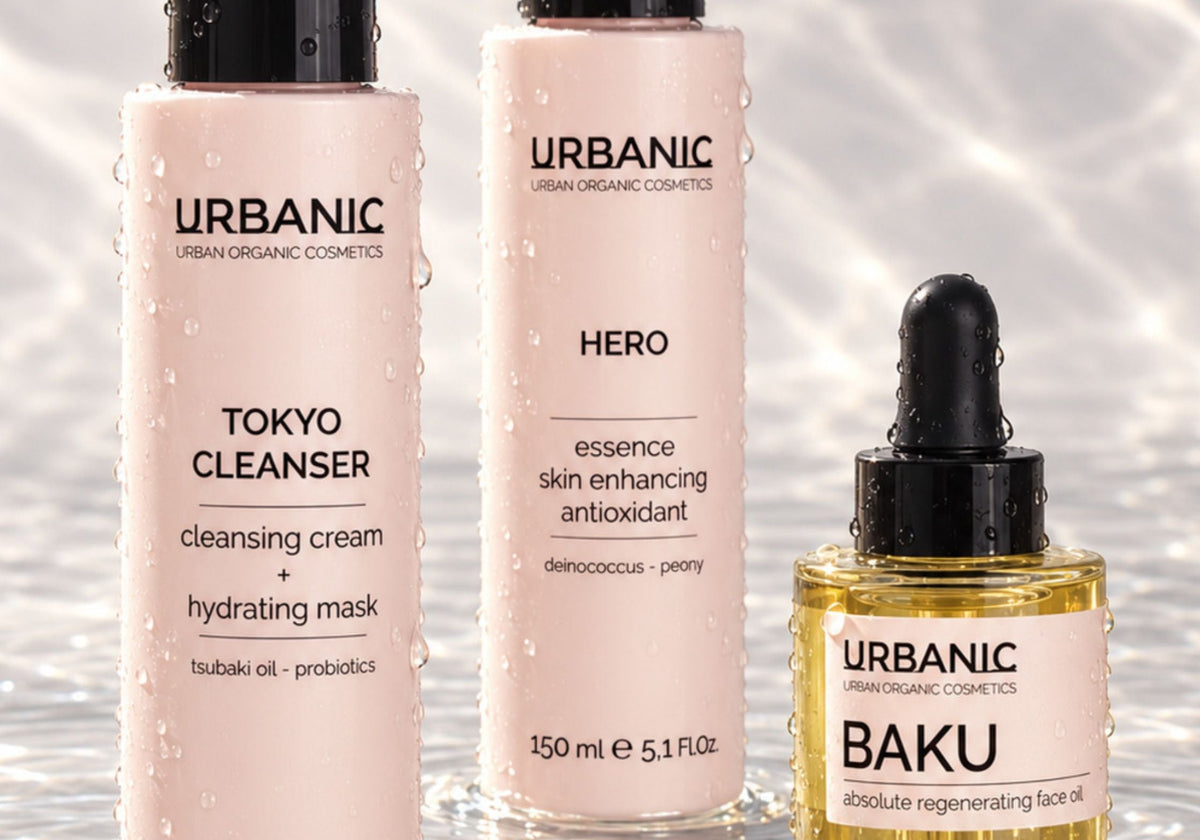
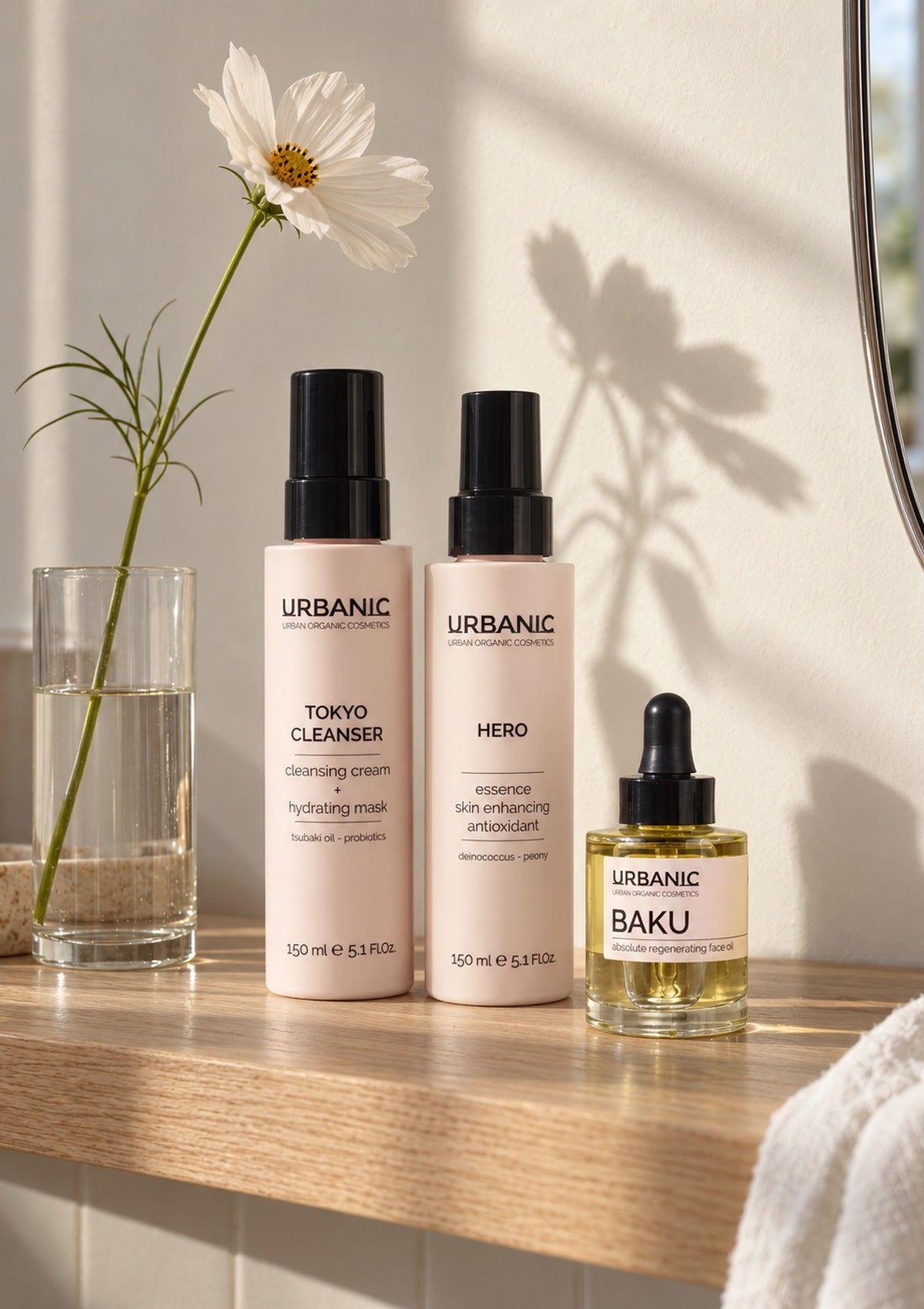
- Cleanse with Tokyo. A 2-in-1 cleansing cream: it removes makeup, sunscreen and impurities from face and eyes without drying the skin. Left on for a few minutes, it becomes a hydrating mask.
- Prep with Hero. Mist it onto skin that is still damp: it helps restore the natural pH and prepares the skin for the next steps.
- Nourish with Baku. A few drops of face oil on damp skin, on its own or mixed with your cream, support the skin barrier. Here is why to add a face oil to your routine.
If you prefer an even more essential routine, also read Minimal skincare: how to build an effective routine with few products.
Frequently asked questions about face cleansing
How many times a day should you cleanse your face? Twice: morning and evening. More only after heavy sweating or sport.
Is double cleansing always necessary? No. It is for the evening, if you have worn makeup or a water-resistant sunscreen. Otherwise one thorough cleanse is enough.
Can I use the same cleanser morning and evening? Yes, if it is gentle and your skin does not feel tight after rinsing.
What should I do if my skin feels tight after cleansing? It is a sign of a product that is too harsh or water that is too hot. Change texture and lower the temperature. If persistent redness appears, ask a dermatologist for advice.
Do I really need a toner after cleansing? It is the step that prepares the skin for the treatments that follow, which is why it works best on skin that is still damp.
The 3-step routine, in a single purchase
Tokyo, Hero and Baku make up the routine we have talked about: cleanse, prep, nourish. Together, in a single purchase, they cost €115.60 instead of €136: 15% less.
Discover the 3-Step Routine: €115.60 instead of €136
Cannot be combined with other discount codes.




Leave a comment
This site is protected by hCaptcha and the hCaptcha Privacy Policy and Terms of Service apply.